How Is Artificial Intelligence Changing Education?
Explore how artificial intelligence is changing education by supporting students, helping teachers, personalizing learning, improving practice, and creating new ways to learn with technology.
September 17, 2026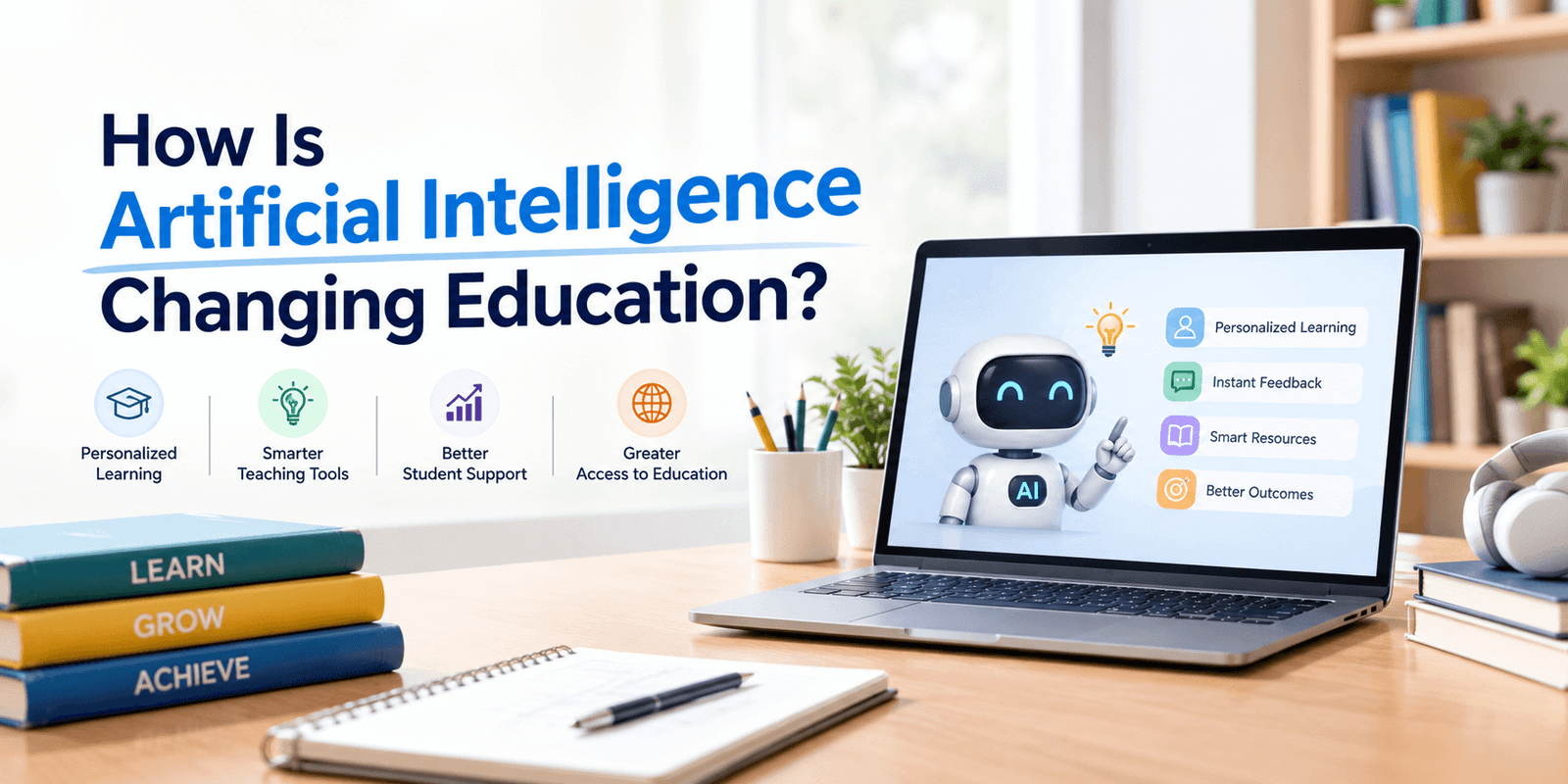
Artificial intelligence (AI) is becoming an important part of modern education. Students are using AI tools to understand difficult topics, practise skills, and get additional learning support. Teachers are also using AI to prepare lessons, create activities, and develop learning materials.
However, AI is only a tool that supports education. Teachers continue to play an important role in guiding students, explaining concepts, providing feedback, and creating meaningful learning experiences.
AI Gives Students Extra Support
Students learn at different speeds. While some students understand a topic quickly, others may need more examples or explanations before they fully understand it.
AI can provide additional support by explaining concepts in simpler words, showing different examples, and creating practice questions. This allows students to spend more time understanding lessons at their own pace.
AI Makes Learning More Personal
Every student has different strengths, weaknesses, and learning needs. Traditional classroom activities may not always provide the same level of support for every student.
AI can help create more personalized learning experiences by adjusting practice activities based on a student's understanding. Students who understand a topic can try more advanced questions, while others can spend more time building basic skills.
This helps students focus on areas where they need the most improvement.
AI Helps Teachers With Daily Tasks
Teaching includes many responsibilities beyond classroom instruction. Teachers spend time preparing lessons, creating questions, checking assignments, and planning activities.
AI can help with some of these tasks by creating quiz ideas, suggesting activities, and helping prepare learning materials. However, teachers still need to review AI-generated information because AI can sometimes provide incorrect or unsuitable answers.
AI Can Make Practice More Interesting
Practising the same type of question repeatedly can become boring for students. AI can help create different ways to practise a topic.
For example, a student learning mathematics can practise through number problems, word problems, quizzes, or real-life examples. Different learning methods can help students understand concepts from multiple angles.
AI Can Explain Difficult Subjects
Some topics are challenging because they involve multiple steps or complex ideas. AI can help break these topics into smaller parts and explain them in easier language.
A student can ask AI to explain a difficult math problem step-by-step or request a simple example of a scientific concept. This type of support can help students understand lessons better.
The goal should be learning and understanding rather than simply copying answers.
AI Is Changing Homework
AI is changing how students approach homework and study. Instead of only searching for answers, students can use AI to understand difficult questions, get additional examples, and practise similar problems.
Using AI as a study assistant can make learning easier. However, students should avoid asking AI to complete entire assignments and copying the results without understanding the work.
Learning happens when students think, practise, and solve problems themselves.
Teachers Are Still Important
Although AI can provide information quickly, education involves much more than delivering information. Teachers understand students' needs, identify confusion, provide encouragement, and adjust their teaching methods.
Classroom discussions, teamwork, feedback, and communication are important parts of learning that technology cannot fully replace.
AI can support teachers, but teachers remain a central part of the education process.
Students Need to Use AI Carefully
AI tools are not always perfect. They can sometimes provide incorrect information or misunderstand a question. Students should verify important information and ask teachers for guidance when needed.
Students should also protect their privacy while using AI tools. Personal information such as passwords, home addresses, and private details should never be shared with AI systems.
What Does the Future Look Like?
AI is creating new opportunities for students and teachers. Students can use AI for additional explanations, practice, and learning support, while teachers can use it to make preparation tasks easier.
At the same time, the basic principles of education remain the same. Students still need to ask questions, develop understanding, practise skills, and learn from mistakes.
Artificial intelligence will continue to become a bigger part of education, but the future of learning will depend on combining technology with the guidance and experience of teachers.